

How AI is changing Marketing basics. Like a Knife through the Cake
A brief study about how GEO is changing the SEO & Marketing game
AI is changing Marketing : The digital marketing landscape is undergoing its most radical transformation since the dawn of the smartphone. The culprit? Generative Artificial Intelligence.
We are moving rapidly away from traditional keyword-matching search engines and toward an era of “Answer Engines.” For platforms like M Woke Media, staying ahead means understanding exactly how AI is rewriting the rules of audience engagement, content production, and search visibility.
Here is how AI is fundamentally changing marketing—and how you can adapt your WordPress site to stay on top.
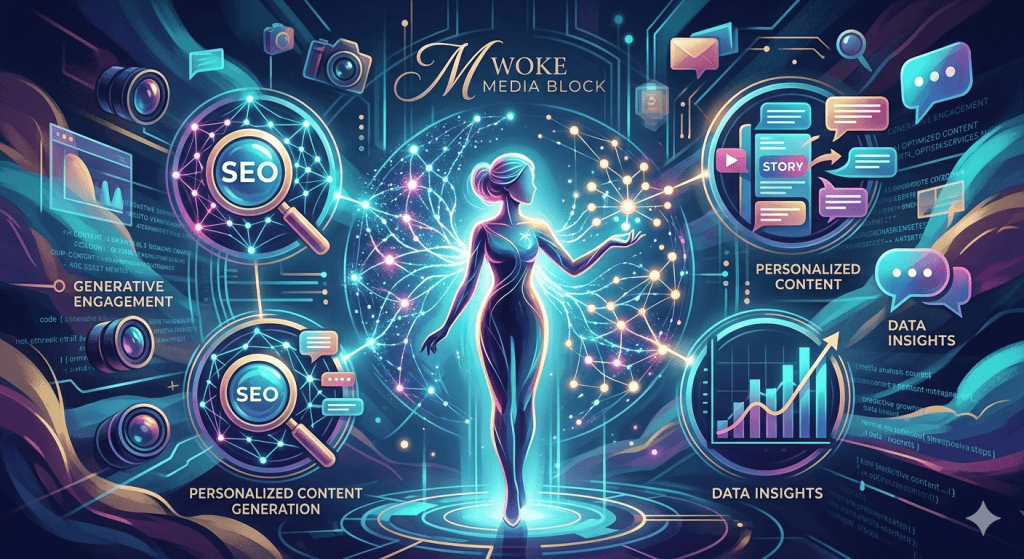
1. The Death of the Click? The Rise of GEO
For decades, Search Engine Optimization (SEO) was simple: rank your link on page one, and users will click it. Now, with platforms integrating tools like Google’s AI Overviews and ChatGPT into everyday browsing, users get comprehensive answers directly on the search page without ever clicking through to a website.
This shift has birthed a new discipline: Generative Engine Optimization (GEO).
Instead of formatting posts just for human eyes, digital marketers must structure their content so AI algorithms can crawl, interpret, and cite them easily. The goal is no longer just to be ranked—it is to be the trusted source that the AI summarizes for the user.
2. Moving From “Commodity Content” to E-E-A-T
Because tools like Claude and ChatGPT allow anyone to churn out endless blog posts with a single click, the web is facing a massive wave of generic content. However, search data shows that while purely AI-generated text might initially spike in rankings due to heavy keyword optimization, it ultimately suffers a steep drop over time due to high bounce rates and poor human engagement.
Search engines are countering this AI fluff by doubling down on E-E-A-T:
- Experience (First-hand, real-world knowledge)
- Expertise (In-depth topical authority)
- Authoritativeness (Reputable backing)
- Trustworthiness (Fact-checked transparency)
To stand out, your articles must contain unique human elements that an AI cannot replicate: original case studies, personal anecdotes, quotes from industry experts, and unique data. AI is changing Marketing. Link
3. Hyper-Personalization at Scale. AI is changing Marketing
AI has completely transformed audience segmentation. Instead of grouping users into broad, static buckets (like “Millennials interested in tech”), AI data systems track real-time behavioral patterns, purchase intents, and user sentiments.
This allows brands to craft highly targeted, immersive storytelling experiences. Modern marketing campaigns leverage AI to dynamically tweak messaging, tone, and visual styles to match the precise mood and emotional drivers of a specific customer segment.
How to Optimize Your WordPress Site for the AI Era
To maintain a perfect readability score on WordPress and ensure AI engines love your site, follow this structured setup:
1.Lead with the ‘Inverted Pyramid’:On-Page Structure.
Place a concise, 2-to-3 sentence direct answer to your article’s core question right at the very top. AI engines look for these summaries to pull directly into their generative answer boxes. Link
2.Use Clean Heading Hierarchies:Readability.
Organize your post with clear, sequential H2 and H3 tags. Keep paragraphs short (no more than 3 sentences) and use bullet points frequently. This boosts your WordPress readability score and makes your data scannable for AI bots.
3.Deploy Schema Markup:Technical SEO. Link
Use an SEO plugin (like Rank Math or Yoast) to apply Schema Markup. Turning on Article, FAQ, or How-To schema translates your human words into structured code that search algorithms can index seamlessly.
4.Optimize for Core Web Vitals:Performance.
AI search experiences heavily penalize slow or unstable sites. Compress your images, use descriptive alt-text for accessibility, and implement a caching plugin to guarantee instant mobile loading speeds.
The Takeaway: AI is not replacing the human marketer; it is replacing the marketer who refuses to use AI. The future belongs to a hybrid workflow—using AI to automate data sorting and initial drafts, while relying on human creativity and real-world experience to provide authentic, trustworthy authority.
